

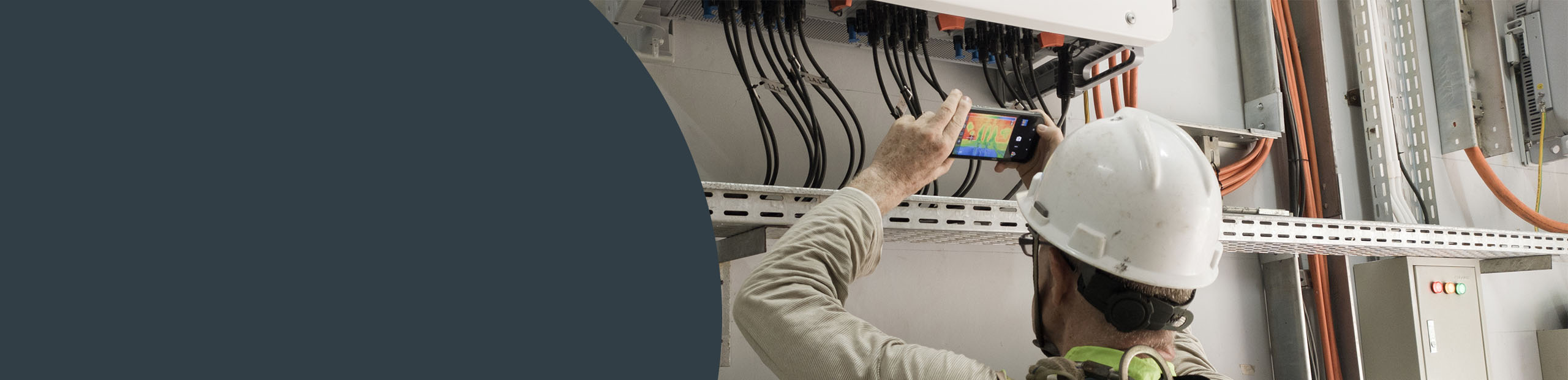
Thermal Imaging Surveys
- Professional thermal imaging surveys
- Finds hidden heat loss on your pipes and plant
- Commercial, industrial and public sector sites
- Experienced survey teams
You’re in good company. We’ve worked with the following commercial clients… View all















Thermal Imaging Surveys
Thermographic Surveys for Pipes and Plant
You can't see heat escaping. A pipe can look fine from the outside while the insulation underneath is wet, crushed or missing. Valves left bare after a repair, gaps under cladding and failed joints all leak heat every hour your system runs. They rarely show up until the bills rise or something fails.
Rated on Google


The power of thermal imaging can identify potential defects and prevent faulty thermal installations in the future
ICE Thermal carries out thermal imaging surveys, also called thermographic surveys, for commercial and industrial sites across the UK. We use a thermal camera to show the surface temperature of pipes, valves, tanks, ductwork and plant, so problem areas stand out clearly. You get a clear report with photos, locations and what to fix first.
Call 02033764802 or contact enquiries@icethermal.co.uk to book a thermal imaging survey for your site.

Get in touch today,
I'm happy to help
By asking you a few questions on the phone or via email, I can instantly provide you with an estimate of how much the service will cost.
Our thermal imaging surveys treatment process

Step 1 Contact
To book a free, no-obligation site visit, call us on 02033764802 or email us at enquiries@icethermal.co.uk.
A member of our friendly support team will get back to you to talk through your thermal imaging survey. To help us plan, it's useful to know:
- What type of site it is, such as a hospital, school, office, factory or plant room
- What you'd like us to survey, such as pipework, valves, tanks, ductwork or whole plant rooms
- Why you need the survey, such as high energy bills, suspected heat loss, an energy audit or planning next year's maintenance
- Roughly how many plant rooms, risers and service routes there are
- When your systems run at their normal working temperature
- Whether you also want heat loss figures, costs or carbon savings in the report
- Any deadlines, such as an audit, budget meeting or project start date
Site drawings and photos are helpful if you have them, but they're not essential. Where we can, we'll give you an early idea of cost over the phone or by email.

Step 2 Quote
To give you an accurate price, we may visit your site first to agree the scope, following all health and safety rules. On a smaller job, we can often agree everything over the phone instead.
Either way, we'll confirm:
- The areas, plant rooms and systems to be surveyed
- When the survey should take place, so systems are at normal working temperature
- The access we'll need, such as plant rooms, risers, roof plant and ceiling voids
- Any site rules, permits or escorts needed
- What you'd like in the report, such as thermal images only, or full heat loss figures and costed repairs
We'll carry out a risk assessment at the same time, so nothing unexpected comes up on the day. This covers access, working at height, hot surfaces, live plant and any site rules.
Our team will then recommend the right type of survey for your needs and answer any questions you have. If you need a full picture of every item, its condition and what it's costing you, we may suggest adding a condition and heat loss survey. You'll receive a free, clear quote showing:
- The survey scope and the areas included
- What the report will cover
- A fixed price
- How long the survey will take on site
- When you can expect the report
There's no obligation to go ahead, and the quote is yours to keep.

Step 3 The works
Before the survey, we'll send you our risk assessments and method statements (RAMS). We'll agree the date, start time, access and any permits with you. We'll also ask you to make sure systems are running at their normal temperature on the day, as this gives the clearest results.
Our fully trained engineers will arrive on time, in uniform and with ID badges, ready to begin. They'll walk every area in scope with a thermal imaging camera. The camera shows surface temperatures as colours, so hot spots stand out clearly. This lets us find:
- Bare pipes, valves, flanges and fittings
- Missing, thin or failed insulation
- Wet insulation, which loses heat faster
- Hidden gaps under cladding and finishes
- Hot surfaces that could be a burn risk
The camera doesn't touch anything or need systems to be shut down, so your site can carry on as normal. For each problem we find, we'll take a thermal image and a matching normal photo, and note its location. We'll also record conditions at the time of the survey, such as air temperature, so the results can be compared with any future surveys.
If we find anything that might contain asbestos, we won't disturb it. Instead, we'll flag it in the report so you can arrange a specialist survey.
We'll keep out of the way of your team and leave every area as we found it. Before we leave, we'll give you a quick summary of anything urgent, such as a serious burn risk.

Step 4 After care
Here at ICE Thermal, we go the extra mile to make sure every client is happy.
After the survey, you'll receive a clear written report that includes:
- Thermal images and matching photos of each problem area
- The location of every issue, so it's easy to find again
- A description of what we found and why it matters
- Priorities, so you know what to fix first
- Our recommendations for each issue
- Heat loss, cost and carbon figures, if these were part of the scope
The report is yours to keep and use however you like. It's useful for energy audits, budget planning, net zero targets, insurers and maintenance teams.
Our dedicated customer service team will be in touch after the survey to make sure all your expectations have been met. We're happy to talk you through the report and answer any questions. If you'd like us to fix what we found, we can quote for insulation repairs, valve jackets or new insulation. There's no pressure to use us for the work. We can also repeat the survey each year, so you can track progress and catch new problems early.
You'll also be given the opportunity to leave a Trustpilot review, so other customers can hear about your experience.
Our helpline is open 9:00 -17:30 Monday-Friday
When calling please have
the following ready:
- Your Name
- Company Name (if applicable)
- Site Postcode
- The problem you're having
- Email Address
Get a Quote
FAQs
The basics
What can a thermal imaging survey find?
It can find missing or failed insulation, hidden gaps, wet insulation, bare valves and areas losing heat that you can't see by eye.
What is a thermal imaging survey?
It uses a thermal camera to show the surface temperature of pipes, valves, ducts and plant. Hot spots show where heat is escaping.
Materials and methods
Can thermal imaging see through cladding?
No, it shows the surface temperature. But hot spots on cladding usually mean the insulation underneath has failed, so the camera still points to the problem.
How does a thermal imaging camera work?
It picks up the heat given off by surfaces and turns it into a picture. Warmer areas show up in brighter colours.
Standards and compliance
Is thermal imaging safe to use in live plant rooms?
Yes. The camera doesn't touch anything or give off radiation, so we can survey live plant without shutting it down.
Do thermal imaging surveys follow recognised methods?
Yes. We follow recognised good practice for thermography and record conditions, such as air temperature, at the time of the survey.
Estimates and charges
Is thermal imaging cheaper than a full condition survey?
Usually, yes. Thermal imaging is quicker and focuses on heat loss. A condition survey goes further, logging every item and costing repairs.
How much does a thermal imaging survey cost?
It depends on the size of the site and how many areas are in scope. We'll agree a fixed price before we start.
On the job
When is the best time for a thermal imaging survey?
When your systems are at normal working temperature. For heating systems, that usually means the heating season.

Why choose us?
- Cater to domestic, commercial, and industrial facilities
- Nationwide coverage
- A site survey can be provided prior to quotation
- A bespoke service designed to suit all your needs
- All operatives hold professional health and safety qualifications
We’re fully accredited
We take health and safety, our professional expertise and our legal obligations very seriously. You can view a list of our accreditations below or visit our Health & Safety page for more information.


What is a thermal imaging survey?
A thermal imaging survey uses a special camera that sees heat instead of light. It turns the surface temperature of everything in view into a colour picture. Warm areas show up bright. Cooler areas show up dark.
On insulated systems, this makes problems easy to spot. A well-insulated pipe should feel and look cool on the outside. A bright patch means heat is getting out, usually because the insulation is missing, thin, wet or damaged.
The camera doesn't touch anything, and systems don't need to be shut down. That means we can survey live plant rooms while your site carries on as normal.
What a thermal imaging survey can find
- Bare pipes, valves, flanges and pumps
- Missing, thin or failed insulation
- Wet insulation, which loses heat much faster than dry insulation
- Gaps and damaged joints hidden under cladding
- Hot surfaces that could burn staff or the public
- Cold spots on trace heated pipes that may point to a fault
- Heat loss from tanks, calorifiers and ductwork
Thermal imaging shows you where to look. If you also need every item logged, measured and costed, our Condition & Heat Loss Surveys go a step further.
What's included
- A call or site visit to agree the areas in scope
- A survey carried out with systems at normal working temperature
- Thermal images and matching photos of each problem area
- The location of every issue, so it's easy to find again
- Notes on what we found and why it matters
- Priorities, so you know what to fix first
- Our recommendations for each issue
- Heat loss, cost and carbon figures, if you need them
- A written report you can share with your team
Key benefits of a thermal imaging survey
- See what you can't see. Find hidden heat loss without stripping anything back.
- No shutdown needed. We survey while your systems are running.
- Spend in the right place. Fix the worst areas first, instead of guessing.
- Safer sites. Find hot surfaces before someone gets burned.
- Evidence for budgets. Clear images help get repair work approved.
- Track progress. Repeat the survey each year to check repairs and spot new problems.
- Check new work. Make sure new insulation is right before handover.
When do you need a thermal imaging survey?
Most sites book a survey for one of these reasons:
- Energy bills are rising and you don't know why
- Plant rooms or risers feel too hot
- You're planning next year's maintenance budget
- An energy audit, insurer or net zero plan needs evidence
- New insulation has been fitted and you want it checked
- Insulation has been disturbed by repairs or other trades
- You've taken on a building and want to know its condition
For heating systems, the best time to survey is during the heating season, when pipes are at their normal working temperature.
How to get the most from your survey
A thermal camera can only show heat that's there, so timing matters. Make sure heating, hot water and process systems are running at their normal temperature on the day. If a system is off, cold or only just switched on, problems can be missed.
It also helps to give us access to plant rooms, risers, roof plant and ceiling voids, and to let us know about any areas with site rules or permits. Old drawings and past survey reports are useful too, as they help us compare what's changed. If you'd like to track progress, book the next survey for the same time of year.
Thermal imaging for new-build and refit projects
Thermal imaging isn't only for older buildings. On new-build and refit projects, a survey before handover checks that insulation has been fitted properly and nothing has been missed. Problems found at this stage are quicker and cheaper to put right, before ceilings close up and the building is in use.
We work with main contractors, M&E contractors and building owners to plan surveys around the project programme.
From survey to fix
Once you have the report, the next step is up to you. You can pass it to your own maintenance team or another contractor. Or we can quote to fix what we found, including Insulation Repair & Reinstatement, Valve Jackets & Covers and new Pipework Insulation. There's no pressure to use us for the work.
Who we help
- Offices and commercial buildings
- Hospitals, clinics and care homes
- Schools, colleges and universities
- Factories, food plants and process sites
- Data centres
- Hotels and leisure centres
- Housing providers with communal heating
- Facilities management companies
- Main contractors and M&E contractors
Compliance and paperwork
We send risk assessments and method statements (RAMS) before the survey. We record the conditions on the day, such as air temperature, so your results can be compared with future surveys. If we find anything that might contain asbestos, we won't disturb it. We'll flag it in the report so you can arrange a specialist survey. The report is yours to keep and use for energy audits, budgets, insurers and maintenance planning.
Book a thermal imaging survey with ICE Thermal
If you think your building is losing heat, a thermal imaging survey is the quickest way to find out where. Book a survey with ICE Thermal and get a clear report that shows you what to fix first. Call 02033764802 or email enquiries@icethermal.co.uk to get started.