

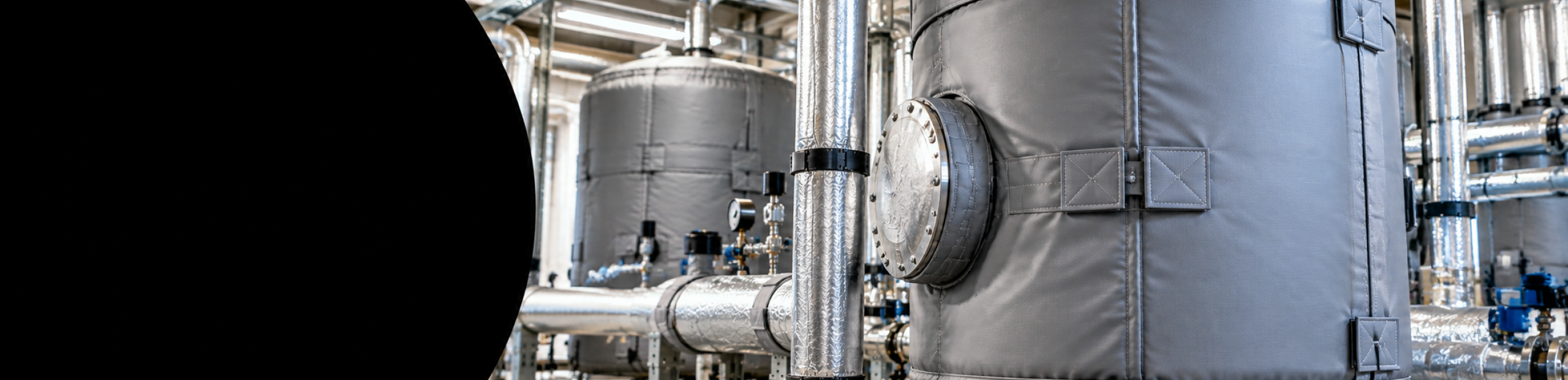
Vessel, Tank & Plant Room Insulation
- Professional tank and vessel insulation
- Keeps heat in and plant running efficiently
- Commercial, industrial and process sites
- Experienced insulation teams
You’re in good company. We’ve worked with the following commercial clients… View all


















Vessel, Tank & Plant Room Insulation
A plant room full of bare tanks and vessels is a plant room full of wasted heat. Large hot surfaces lose energy fast. They push up room temperatures, make equipment work harder and create a real burn risk for anyone working nearby. Cold tanks have the opposite problem, with condensation, corrosion and frost.
Rated on Google


ICE Thermal fits tank insulation and vessel insulation across the UK. We insulate calorifiers, buffer vessels, cylinders, heat exchangers, boilers and industrial storage tanks, plus all the pipework that joins them. Every job starts with a free site survey, so each item is insulated to suit its size, shape and temperature.
Contact our friendly team by calling 0203 376 4802 or sending an email to enquiries@icethermal.co.uk to learn more about how we insulate vessels, tanks & plant rooms.

Get in touch today,
I'm happy to help
By asking you a few questions on the phone or via email, I can instantly provide you with an estimate of how much the service will cost.
Our vessel, tank & plant room insulation treatment process

Step 1 Contact
To book a free, no-obligation site survey, either give us a call on 0203 376 4802 or email us on enquiries@icethermal.co.uk.
A member of our friendly support team will get back to you to talk through your Vessel, Tank & Plant Room Insulation needs. It helps if you can tell us which vessels, tanks or plant need insulating, their rough sizes and whether they run hot or cold. Photos are useful too, if you have them.
Where we can, we'll give you an early idea of cost for your Vessel, Tank & Plant Room Insulation service. If necessary, our engineers will visit the site to review the current situation, at a time that suits you.

Step 2 Quote
Following all health and safety rules, our engineer will visit your site and carry out a full survey. For your Vessel, Tank & Plant Room Insulation service, we'll measure every vessel, tank and item of plant, record operating temperatures and note inspection points, manways and nozzles. We'll also check access, working at height and any confined space risks.
We'll also carry out a risk assessment, so nothing unexpected comes up once work starts. This covers access, working at height, other trades on site and any hazards we find.
Our team will then recommend the best option for your site and answer any questions. You'll receive a free, detailed quote for your Vessel, Tank & Plant Room Insulation service, showing each item to be insulated, the material and thickness, the cladding finish and any removable sections for inspection, along with a likely timeframe for the work.

Step 3 Cleaning
Our fully trained engineers will arrive on time, in uniform and with ID badges, ready to begin the work. Before we start, we'll send you our risk assessments and method statements (RAMS) and agree working areas, times and access with you.
Our engineers will fit support rings and insulation to each vessel, cutting it carefully around domes, nozzles and supports. Cold vessels get a sealed vapour barrier. Each item is then finished in fabricated metal cladding, with removable covers over inspection points.
The work will be completed in line with the survey and quote, following all health and safety rules. We keep a safe working area for everyone on site at all times, and can work early, late or at weekends to limit disruption.
When we finish, our team will check the completed work with you and make sure you're happy with the job. We promise to leave your site safe, clean and tidy, with all waste removed.

Step 4 After care
Here at ICE Thermal, we go the extra mile to make sure every client is happy.
You'll receive a handover pack for your Vessel, Tank & Plant Room Insulation service, including the materials used, product data sheets, photos of each item and a note of all removable inspection covers. Keep it with your building records, as it's useful for audits, insurers and future work.
Our dedicated customer service team will get in touch with every client after the Vessel, Tank & Plant Room Insulation service, to make sure all expectations have been met. We can also add valve jackets and pipe labels to finish the plant room in one go.
You'll also be given the opportunity to write a Trustpilot review.
Our helpline is open 9:00 -17:30 Monday-Friday
When calling please have
the following ready:
- Your Name
- Company Name (if applicable)
- Site Postcode
- The problem you're having
- Email Address
Get a Quote
FAQs
The basics
Do cold water and chilled tanks need insulating too?
Yes. Cold water tanks can warm up, which can affect water quality, and chilled tanks can sweat. Insulation with a vapour barrier keeps them at the right temperature and dry.
Why insulate a calorifier or hot water cylinder?
Large tanks lose a lot of heat from their surface. Insulating them keeps stored water hot, cuts energy use and makes the plant room cooler and safer.
Materials and methods
Can tank insulation be removed for vessel inspections?
Yes. We can fit removable sections or covers over inspection points and manways. That way, inspections don't mean stripping and replacing insulation each time.
How do you insulate curved or domed tank ends?
We cut and fit insulation segments to follow the shape, then cover them with fabricated metal cladding. This leaves no gaps where heat can escape.
Standards and compliance
What thickness of insulation do calorifiers and cylinders need?
BS 5422 includes guidance for hot water vessels and tanks. Your project may also have its own specification. We'll confirm the right thickness on survey.
Will insulation get in the way of our pressure vessel inspections?
It doesn't need to. Calorifiers and other pressure vessels need regular inspections under the Pressure Systems Safety Regulations. We fit removable covers over inspection points, so your inspector can get access easily.
Estimates and charges
Is it worth insulating an old tank rather than replacing it?
Often, yes, if the tank is in good condition. Insulation costs far less than replacement and cuts heat loss straight away. We'll tell you honestly if the tank itself looks like it needs attention.
How much does it cost to insulate a plant room?
It depends on how many vessels, pipes and valves there are, their size and temperature, and the finish you want. We'll survey every item and give you one clear quote.
On the job
How long does it take to insulate a calorifier?
A single calorifier can often be insulated and clad in a day or two. A full plant room takes longer. We'll give you a timeframe with your quote.
Customer care
How long will tank and vessel insulation last?
Well-fitted insulation with good cladding can last for many years. It lasts longest when it's kept dry and repaired quickly if it gets damaged.

Why choose us?
- Cater to domestic, commercial, and industrial facilities
- Nationwide coverage
- A site survey can be provided prior to quotation
- A bespoke service designed to suit all your needs
- All operatives hold professional health and safety qualifications
We’re fully accredited
We take health and safety, our professional expertise and legal obligations very seriously. You can view a list of our accreditations below, or visit our Health & Safety page for more information.



What is tank and vessel insulation?
Tank and vessel insulation is a thick layer of material fitted around large pieces of plant. It keeps stored heat inside hot vessels and stops heat getting into cold ones. It is then covered with a hard-wearing finish, such as metal cladding, to protect it from knocks, water and cleaning.
Because tanks and vessels come in many shapes, the insulation is cut and fitted to each one. Domed ends, manways, nozzles and supports all need care, so there are no gaps where heat can escape.
What we insulate
- Calorifiers and hot water storage cylinders
- Buffer vessels and thermal stores
- Plate and shell heat exchangers
- Boilers, flues and breeching (where safe to do so)
- Expansion vessels and pressurisation units
- Chilled water buffer tanks
- Industrial process tanks and storage tanks
- Pumps, strainers and plant room pipework
For valves, pumps and flanges that need regular access, we fit removable Valve Jackets & Covers.
What's included
- A free site survey with measurements and operating temperatures
- Material and thickness chosen for each vessel
- Support rings, banding or fixings to hold the insulation in place
- Careful fitting around domes, nozzles, manways and supports
- Vapour barriers on cold tanks and vessels
- A hard-wearing finish, usually aluminium or stainless steel cladding
- Removable sections where access is needed for inspection
- Full clean-up and waste removal
Plant room insulation
Many sites ask us to insulate the whole plant room in one go. We survey every item, from the boilers to the last valve, and give you one clear quote. This is often the quickest way to cut energy use in an older building, because plant rooms lose so much heat in one place.
We also add Sheet Metal Cladding to give the room a clean, durable finish that is easy to keep tidy.
Key benefits of tank insulation
- Big energy savings. Large hot surfaces lose a lot of heat, so insulating them has a fast payback.
- Cooler plant rooms. Less heat escapes into the room, which helps controls and electrics last longer.
- Safer to work in. Insulated surfaces protect engineers from burns.
- Stored water stays hot. Stable temperatures help your Legionella control plan.
- No condensation on cold tanks. A sealed vapour barrier stops drips and corrosion.
- Protects your plant. Cladding shields vessels from knocks, water and weather.
When you need it
- A new plant room or plant replacement
- A new calorifier, buffer vessel or heat exchanger has been fitted
- Old insulation is damaged, wet or has been stripped for inspection
- The plant room is too hot to work in
- An energy or condition survey flagged bare vessels
- External tanks need weatherproofing or frost protection
Industrial tank insulation
On process and industrial sites, tanks often hold liquids that must stay at a set temperature. We insulate storage and process tanks for food, drink, chemical and manufacturing sites. Where tanks also need heat adding, we can combine insulation with Trace Heating.
Who we help
- Commercial buildings and plant rooms
- Hospitals and healthcare estates
- Schools, colleges and universities
- Hotels and leisure centres with pools
- Food, drink and process plants
- Factories and industrial sites
- District heating and energy centres
- M&E and main contractors
Compliance and paperwork
We send RAMS before work begins, including any work at height or in confined spaces. Thickness follows BS 5422 or your specification. On completion, you get a handover pack with materials used, data sheets and photos. Inspection points are left clear or fitted with removable covers, so your insurance inspections can go ahead.
Book tank and vessel insulation with ICE Thermal
Bare tanks and vessels cost you money every day they run. ICE Thermal fits tank, vessel and plant room insulation that cuts heat loss and keeps your team safe. Call 0203 376 4802 or email enquiries@icethermal.co.uk to book a free site survey and quote.