

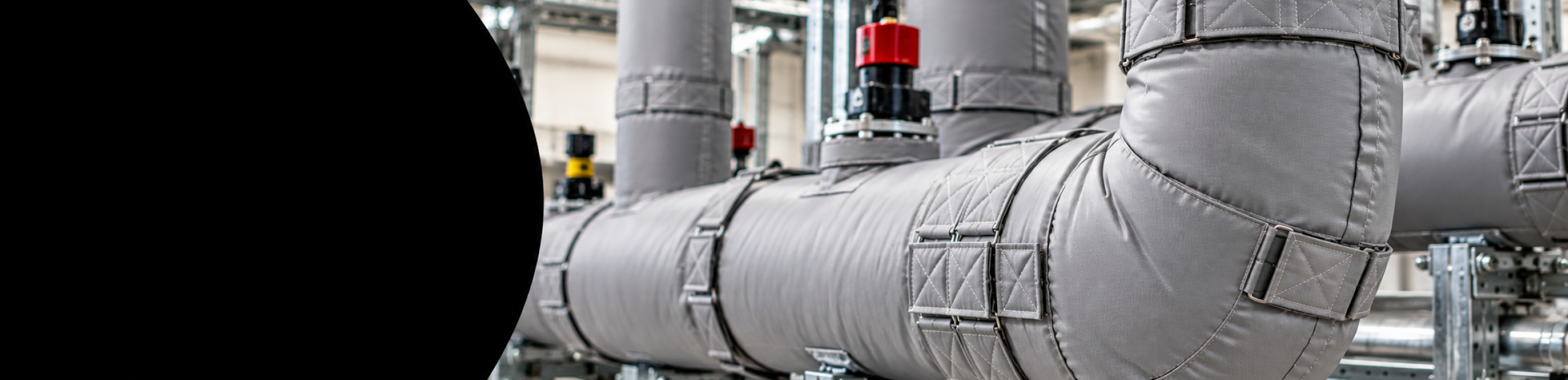
Passive Fire Protection
- Professional passive fire protection
- Tested products with full photo records
- Commercial, residential and public buildings
- Trained fire stopping teams
You’re in good company. We’ve worked with the following commercial clients… View all



















Passive Fire Protection
Fire walls and floors are built to hold a fire in one place, giving people time to get out. But every building has weak points. Pipes, cables and ducts pass through those walls and floors, and joints are left where walls meet the slab above. If any of these gaps are left open or sealed with the wrong product, fire and smoke can spread straight through. Most of them are hidden above ceilings and inside risers, so nobody knows until an inspection finds them.
Rated on Google


ICE Thermal provides passive fire protection across the UK. We protect ductwork with fire-rated insulation, seal service penetrations and close linear gaps using tested products, fitted exactly to the manufacturer's details. Every job starts with a free site survey, and every piece of work is recorded and photographed, so you have proof of what's been done.
Contact our friendly team by calling 0203 376 4802 or sending an email to enquiries@icethermal.co.uk to learn more.

Get in touch today,
I'm happy to help
By asking you a few questions on the phone or via email, I can instantly provide you with an estimate of how much the service will cost.

Fire Protection
Insulation
We install fire protection insulation to delay the spread of a fire if it breaks out in your building. The materials used are fire-resistant, strategically placed during installation to reduce heat transfer and help inhabitants evacuate.
Find out moreOur passive fire protection treatment process

Step 1 Contact
To book a free, no-obligation site survey, call us on 0203 376 4802 or email us at enquiries@icethermal.co.uk.
A member of our friendly support team will get back to you to talk through your passive fire protection needs. To help us plan, it's useful to know:
- What type of building it is, such as flats, offices, a hospital or a school
- What needs doing, such as fire-rated duct insulation, penetration sealing or linear gap sealing
- Whether it's a new build, a refit or an existing building
- Whether a fire risk assessment has flagged any actions
- Whether you have a fire strategy, fire engineer or drawings showing fire compartments
- Any deadlines, handover dates or inspections coming up
If you have a fire risk assessment report, please send it over. It helps us see what's needed before we visit. Photos and drawings are useful too, but they're not essential. Where we can, we'll give you an early idea of cost over the phone or by email. We'll then book a site survey at a time that suits you.

Step 2 Quote
One of our trained passive fire protection engineers will visit your site to carry out a full survey, following all health and safety rules. They'll review your fire strategy or fire risk assessment, then inspect every area in scope, including risers, ceiling voids, plant rooms and service routes.
Along the way, they'll find, log and photograph each item that needs attention. This includes:
- Every service penetration through fire-rated walls and floors, noting the wall or floor type, its fire rating and the pipes, cables or ducts passing through
- Every linear gap and joint, with its width, depth, length and expected movement
- Every duct that needs fire protection, with its size, route and the rating required
We'll also check any existing fire stopping against tested products. Expanding foam, loose mineral wool and other untested fillers are logged so they can be replaced. If we find anything that might contain asbestos, we won't disturb it. Instead, we'll flag it so you can arrange a specialist survey.
We'll carry out a risk assessment at the same time, so nothing unexpected comes up once work starts. This covers access, working at height, occupied areas, other trades on site and any site rules or permits.
Our team will then recommend the best approach for your building and answer any questions you have. You'll receive a free, detailed quote showing:
- A schedule of every penetration, joint and duct to be treated, with its location
- The tested product or system chosen for each item, and the fire rating it will achieve
- Any old or untested fire stopping that needs removing first
- Access needs, such as ceilings to be lifted or boxing to be opened
- Options to phase the work around residents, tenants or your programme
- A likely timeframe for the job
There's no obligation to go ahead, and the quote is yours to keep.

Step 3 The works
Before we start, we'll send you our risk assessments and method statements (RAMS). We'll agree working areas, start times, access and any permits with you. In occupied buildings, we'll plan access with residents or tenants, so everyone knows what to expect.
Our fully trained engineers will arrive on time, in uniform and with ID badges, ready to begin. They'll remove any untested or failed fire stopping, then install each tested product exactly to the manufacturer's tested details. Plastic pipes get fire collars or wraps, mixed services are sealed with coated batts and sealants, and joints are filled with fire-rated seals that allow for movement. Ducts are protected with tested fire-rated wraps or boards, including the correct fixings and supports. Where different products meet, we use compatible systems so every seal stays covered by its test evidence.
Every seal and protected duct is photographed before and after the work, including layers that will later be hidden. Seals can also be given a unique ID label and logged on the schedule. We'll keep a safe, tidy working area for everyone on site at all times. We can also work early, late or at weekends to keep disruption to a minimum.
When the work is finished, our team will walk the job with you before ceilings or boxing are closed, and check that you're happy with every area. We'll leave your site safe, clean and tidy, with all waste removed and disposed of properly.

Step 4 After care
Here at ICE Thermal, we go the extra mile to make sure every client is happy.
When the job is complete, you'll receive a full record pack that includes:
- The completed schedule of every penetration, joint and duct treated
- Before and after photos of each item
- The products used, their fire ratings and test evidence
- Locations and ID labels for each seal
Keep this pack with your building's fire safety records. It supports your fire risk assessment and helps show building control, insurers and assessors that the work has been done properly. For higher-risk buildings, it also helps you keep the building safety information you need under the Building Safety Act.
Our dedicated customer service team will be in touch after the job to make sure all your expectations have been met. If anything isn't right, we'll come back and put it right. If new services are added in the future, we can seal the new penetrations and update your records. We can also help with what comes next, such as a fire stopping survey of other areas of your building.
You'll also be given the opportunity to leave a Trustpilot review, so other customers can hear about your experience.
Our helpline is open 9:00 -17:30 Monday-Friday
When calling please have
the following ready:
- Your Name
- Company Name (if applicable)
- Site Postcode
- The problem you're having
- Email Address
Get a Quote
FAQs
The basics
What's the difference between active and passive fire protection?
Active systems do something in a fire, like sprinklers and alarms. Passive protection is built in and holds fire back without needing to switch on.
What is passive fire protection?
It's fire protection built into the structure of a building, such as fire-rated walls, floors, ducts and fire stopping. It works all the time to stop fire and smoke spreading.
Materials and methods
Why shouldn't fire stopping products be mixed?
Products are tested as systems. Mixing products from different systems can mean the seal isn't covered by any test. We use compatible, tested products throughout.
What products are used for fire stopping?
Common products include fire collars, wraps, batts, fire-rated sealants, boards and duct wraps. Each one is tested for certain gaps, services and walls or floors.
Standards and compliance
Does fire stopping need to be checked over time?
Yes. Fire stopping can be damaged when new services are added or work is done. Your fire risk assessment should review it regularly.
Who is responsible for fire stopping in a building?
Under the Regulatory Reform (Fire Safety) Order 2005, the Responsible Person must make sure fire safety measures, including fire stopping, are in place and kept up to date.
Estimates and charges
Can you price work from our fire risk assessment?
Yes. Send us the report and we'll survey the actions it lists and give you a quote to close them out.
How is passive fire protection priced?
We price by the number of seals, the length of joints and the area of duct to be protected, plus access. A survey lets us count and price each item.
On the job
Do you check the fire stopping with us before ceilings are closed?
Yes. We photograph every seal and can walk the work with you before ceilings or boxing are closed.

Why choose us?
- Cater to domestic, commercial, and industrial facilities
- Nationwide coverage
- A site survey can be provided prior to quotation
- A bespoke service designed to suit all your needs
- All operatives hold professional health and safety qualifications
We’re fully accredited
We take health and safety, our professional expertise and legal obligations very seriously. You can view a list of our accreditations below, or visit our Health & Safety page for more information.


Passive Fire Protection Across the UK
Passive fire protection keeps your building's fire compartments working as they were designed to. It closes the routes that fire and smoke would use to spread from one area to the next, and it protects ducts that need to keep working during a fire, such as smoke extract systems.
That protects lives, keeps escape routes clear for longer and limits damage to the building. It also helps you clear fire risk assessment actions and keep the fire safety records that building owners now need.
Browse our passive fire protection services below, or get in touch for a free quote.
Our passive fire protection services
Fire-Rated Duct Insulation Tested fire-resistant wraps and boards for ventilation, kitchen extract and smoke extract ductwork. They help stop fire passing along or out of a duct for a set time, often 30, 60 or 120 minutes.
Penetration Sealing Fire stopping around pipes, cables and ducts where they pass through fire-rated walls and floors. We use tested collars, wraps, batts and sealants to put each wall or floor back to its full fire rating.
Linear Gap Sealing Fire-rated seals for head of wall joints, floor edges and movement joints. They hold back fire and smoke while still letting the building move.
What is passive fire protection?
There are two types of fire protection in a building. Active fire protection does something when a fire starts, like a sprinkler spraying water or an alarm going off. Passive fire protection is built into the structure and works all the time, without needing to be switched on.
Passive fire protection includes fire-rated walls, floors, doors and ductwork, and the fire stopping that seals the gaps between them. Together, they split a building into fire compartments. If a fire starts in one compartment, the aim is to keep it there for long enough for people to escape and for the fire service to arrive.
You may also hear it called fire protection insulation, fire stopping or compartmentation. They're all part of the same job.
Why tested systems and records matter
A fire stopping product only gives its rating if it's fitted the same way it was tested. The wrong product, the wrong gap size or a missing fixing can mean it fails in a real fire. That's why our trained teams check each product's test evidence against the wall, floor, service and gap in front of them before anything is fitted.
Records matter just as much. Under the Building Safety Act, owners of higher-risk buildings must keep accurate information about their fire safety work. Every seal and protected duct we fit is logged, photographed and listed with its product and rating, so your records are complete.
When you need passive fire protection
- A fire risk assessment has flagged unsealed gaps or unprotected ducts
- New pipes, cables or ducts have been run through fire walls or floors
- Old fire stopping uses untested products, such as expanding foam
- A refit or tenant fit-out has moved partitions or services
- You're taking over a building and need to know its fire stopping is sound
- A new build or refurbishment needs fire stopping to the fire strategy
- Your building is high-rise or high-risk and needs full fire safety records
Fire protection insulation for every type of building
We work for building owners, managing agents, housing providers and facilities teams. We also work as a specialist subcontractor for main contractors, M&E firms and drylining contractors, and coordinate with your fire engineer so the work matches the design.
Sites we cover include blocks of flats and high-rise residential buildings, hotels and student housing, hospitals and care homes, schools and universities, offices, shopping centres, car parks and commercial kitchens.
Why Choose ICE Thermal
- Coverage across the UK, working around your site
- Tested products, fitted to the manufacturer's details
- Free site survey before any quote
- Fully trained passive fire protection teams
Book passive fire protection with ICE Thermal
One open gap can let fire bypass a whole wall. ICE Thermal provides passive fire protection that seals the hidden routes fire would take, with the records to prove it. Contact our friendly team by calling 0203 376 4802 or sending an email to enquiries@icethermal.co.uk to learn more about our passive fire protection, or to book your free site survey.